Orangutan Stories

Orangutan Stories: How Epeng earnt his name

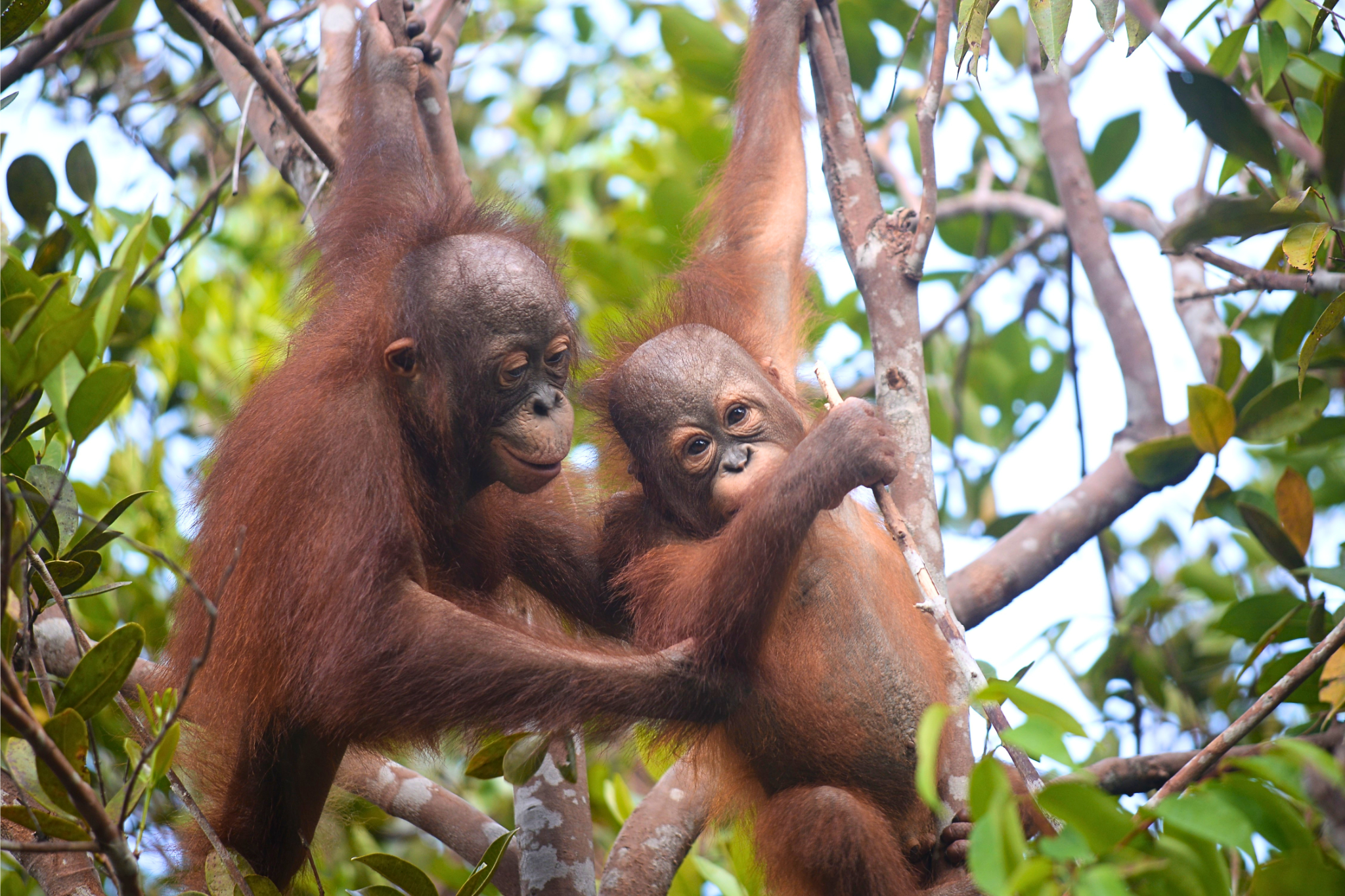
A pair of small hands reach up for a tree branch. With a firm grip and an air of confidence, Epeng climbs a little higher - he is learning how to belong in his forest home once more.

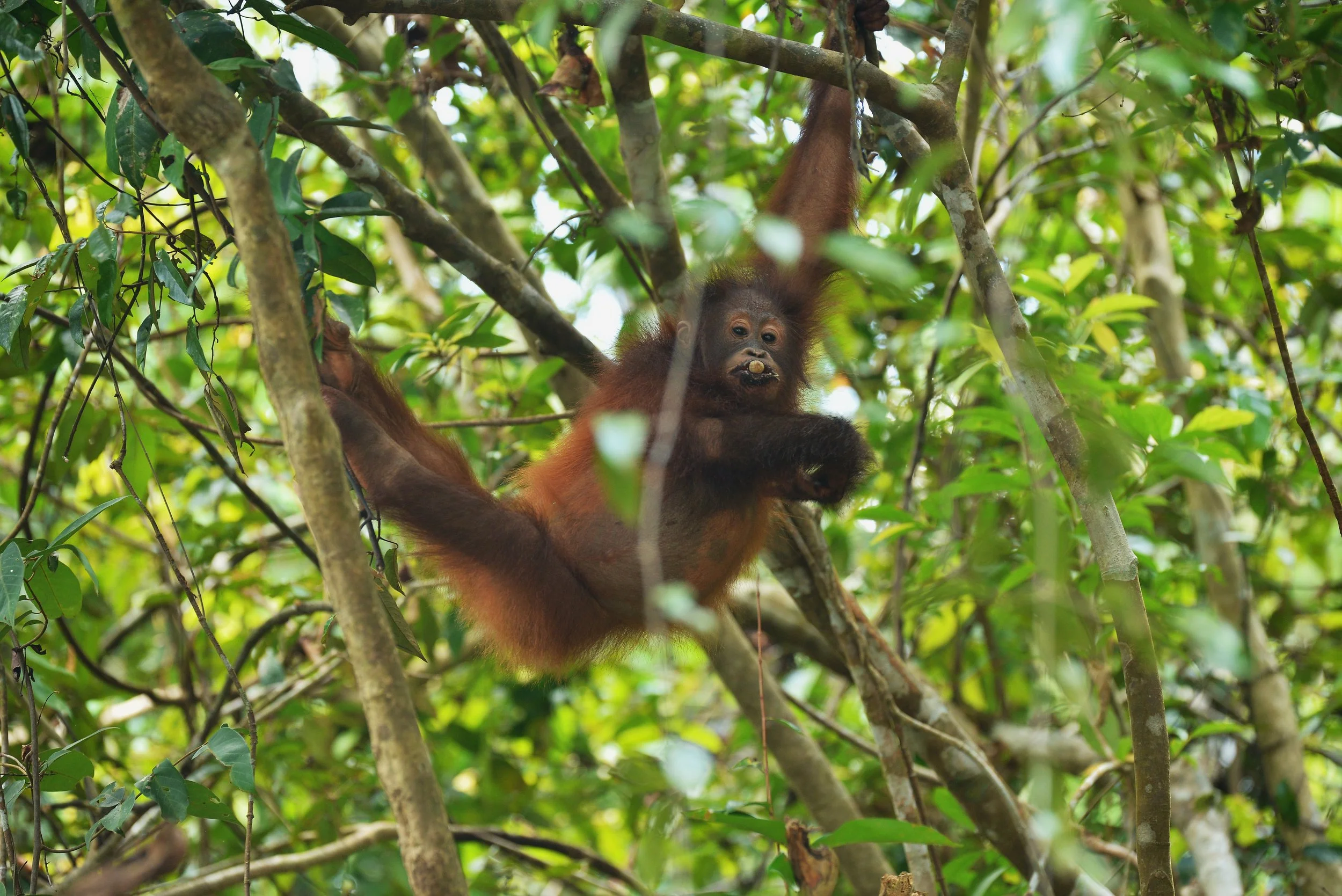
Epeng climbing and foraging, Janaury 2026

Epeng arrived at Orangutan Foundation in mid-2025 when he was handed over from captivity. He was only twelve months old and, like many young orangutans rescued from difficult circumstances, he had reportedly been found alone in the forest, far too young to survive without his mother. Sadly, we will never know the full story.

Epeng now lives at Camp JL in Lamandau Wildlife Reserve, where along with four other recently handed over infants, he is beginning his journey back into the wild. This project is our Soft-Release Programme, which cares for orphans whilst they learn critical survival skills for an orangutan: climbing, foraging and building nests. The end goal is their release into the wild which can take up to eight years. 

Epeng arriving at Orangutan Foundation in his transport cage, July 2025

Of the infants that share Camp JL with Epeng, he is without question the most energetic. With this energy comes bravery. When Epeng decides to move, nothing will slow him down - not even height. As he climbs, he is always looking to the top of the tree, not stopping until he reaches it.

The camp carers know what to expect when bringing the infants to the forest for their daily learning; whilst some pause or cling on to the staff, still apprehensive of their new surroundings, Epeng is already on the move. The trees call to him, and he answers with enthusiasm.

Epeng climbing, September 2025

It is wonderful to see a young orangutan with such an unfortunate start to life exploring the forest like a tiny adventurer. He samples tender young leaves, inspects unfamiliar fruits, and chews thoughtfully on twigs as if trying to understand his home one bite at a time. Nothing seems to escape his attention; each rustling leaf or dangling branch is an invitation to discover something new.

The name ‘Epeng’ carries a small story of its own. Derived from the word ‘empeng’, a Javanese term meaning “to suck for comfort.” The name was chosen because of a habit of the infant that quickly caught his carers attention... Epeng often sucks his index finger!

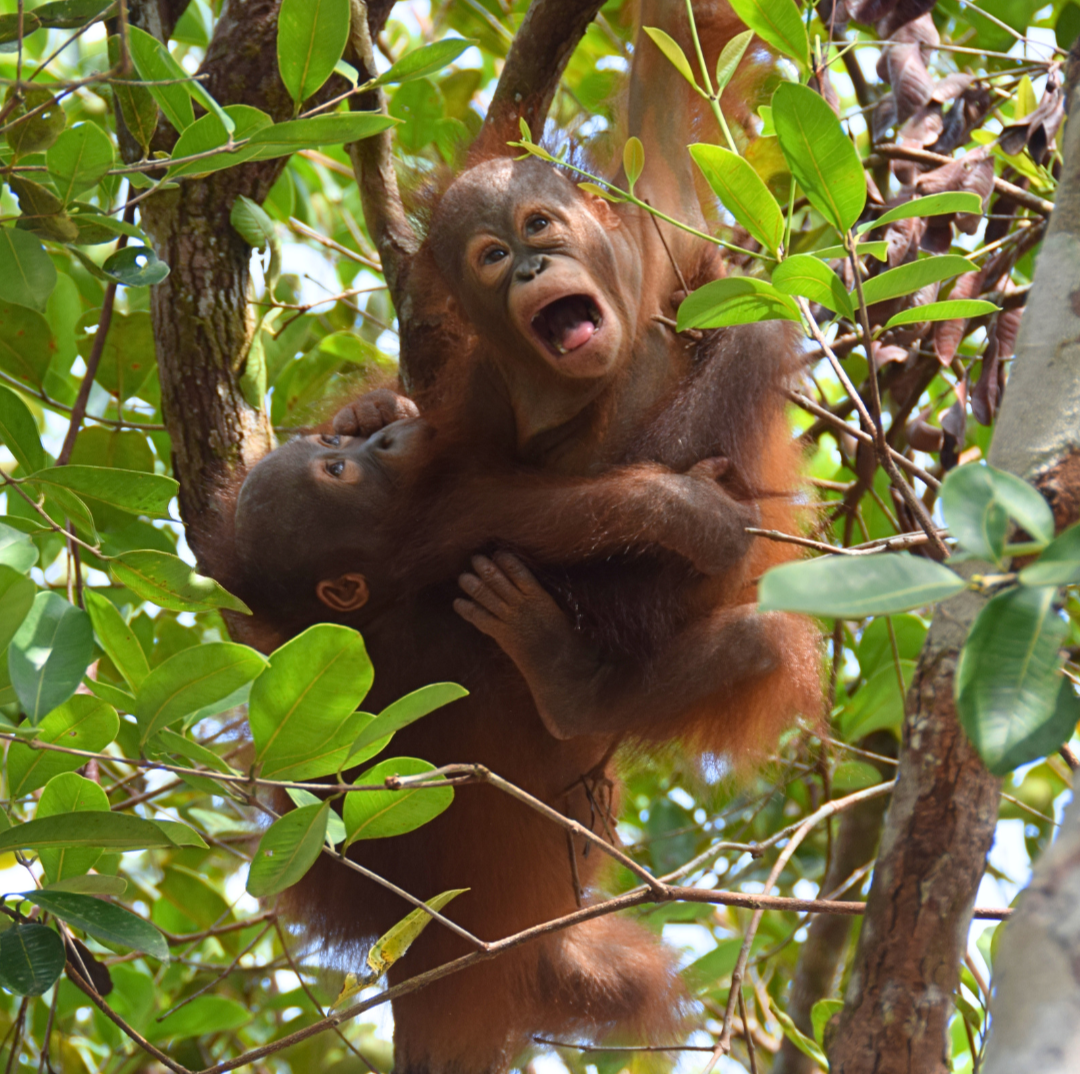
Much like humans, this behaviour seen in many ape species is a form of self-soothing. When the forest becomes quiet and the excitement of the day fades, he sometimes curls up and gently sucks his finger, finding a moment of calm.

Epeng in his sleeping enclosure with enrichment, August 2025

Perhaps, in those early days when Epeng was alone without his mother, this small habit helped him feel safe in a world. But Epeng is no longer alone. Each day in Borneo’s forests, he is learning what it means to be an orangutan. Step by step, branch by branch, Epeng is building the skills that will one day allow him to live independently in the wild, where he truly belongs.


Orangutan Stories: Labetty is pregnant... again!

As a tree-dwelling species, observing the re-introduced orangutans in Lamandau Wildlife Reserve is not always easy; with trees comes height and camouflage! Staff were therefore surprised when they noticed that Labetty was pregnant... her third time in six years!

Labetty, 2025

Orangutan pregnancies are not dissimilar to that of humans; there is a gestation period of around nine months, changes occur both physically and mentally, and behaviours become less strenuous, with more time spent sleeping. Though Labetty’s behavioural changes have been far from peaceful!

Mother and infant resting in Lamandau Wildlife Reserve

Labetty was born in the wild in 2007 to ex-captive Lady Di, who had sadly suffered from a miscarriage the year before. 19 years later, Labetty is now pregnant with her third offspring. Suspiscions arose about her pregnancy from physical indications and altered behaviours in the female, but her enlarged abdomen confirmed the news – and we are delighted!

During Labetty’s pregnancy, her behaviour has changed in its own way. Typically indifferent towards the staff around her, paying them little to no attention, Labetty has been spotted chasing visitors of Camp Rasak, where she has been spending much of her time resting.

Labetty with previous infant (Lego), 2025

Our four camps in Lamandau Wildlife Reserve are only accessible by boat; the team arrive each morning by speedboat to begin their day of work. Last week, staff arrived as normal to the soundtrack of birdsong and the stirring of the orangutan carers who sleep at the camp. As they disembarked the speed boat, walking down the jetty towards the call of camp responsibilities, the speedboat driver Anto took a moment to secure the boat.

Speedboat

Soon after, with the boat in place, Anto followed the team down the jetty... but an angry Labetty soon emerged behind him! Less familiar with Anto, Labetty who had been sleeping beneath the jetty began had clambered on top and began to chase Anto! Luckily, Anto noticed her and managed to get clear... a warning nonetheless from the pregnant female!

Labetty climbing aboard a longboat at camp

It is difficult to confirm the reason for Labetty’s aggression, but it is likely due to mood changes associated with her behaviour. All the team are very excited for Labetty’s birth; this will be the sixth wild birth in the past year!

Orangutan Stories: Fantastic Four

Four infants were recently handed over to our care to join the soft-release programme for orphaned orangutans. But one orangutan, Kiki, is very particular about who is friends with! Orangutans have personalities from a very young age - and can are very entertaining as they grow into themselves more and more.

Orangutan Stories: Gunawan‘s progress in the soft-release programme!

Gunawan in the soft-release programme is growing in confidence… on his first attempt at climbing, he is here to show that a life in the trees is instinctive for the forest ape.

Orangutan Stories: Epeng - new home, new hope

Epeng, recently handed over by his owners, has been settling in well to his first few weeks in the soft-release programme. Already climbing despite his young age, he truly is a testament to the resilience of the forest ape.

Orangutan Stories: welcome to Amel – but what happens to the mothers of orphaned orangutans?

Kept in a small enclosure for eleven years, we hope it is not too late for twelve-year-old Amel to learn how to be an independent orangutan. But Amel’s story highlights a deeper issue - what truly happens to the mothers of orphaned orangutans?

Orangutan Stories: Sony lends a helping hand to his sibling!

Orangutans are a semi-solitary species, rarely interacting as adults. But wild orangutan Sony has been seen helping his younger brother navigate the canopies whilst their mother is not around - an extremely unusual interaction!

Orangutan Stories: finding a mate as a semi-solitary species

All living things - including orangutans - have an innate drive to meet their biological needs; water, food, oxygen, and shelter are all key to surviving in the forest. But what about the drive to reproduce? Learn how this semi-solitary species finds a mate in the forest.

Orangutan Stories: Death and Birth - The Circle of Life in the Wild

Death and birth are natural parts of the circle of life. Unfortunately, this month we were devastated by the passing of one of the infants in Lamandau Wildlife Reserve. But, we welcome three new pregnancies in the wild.

2024 highlights: A look back on our conservation achievements together for orangutans, forests, and people

Orangutans, biodiversity, forest, research, and fundraising. A look back at the critical conservation success we have had together in 2024.

Orangutan Stories: The return of Andy!

The reappearance of long-lost orangutan, Andy! In this orangutan story we explore where Andy has been, as well as his unusual upbringing as an adopted orangutan.

Orangutan Stories: Exploring Food in the Forest

Orangutan Stories:  Exploring Food in the Forest

Orangutans consume a variety of food from the forest to support their large size. Being arboreal species gives them access to the food they need to sustain their body size.